
PHB Corp Excels at Reverse Engineering of Castings
PHB Corp Excels at Reverse Engineering of Castings
Executive Summary
Die-cast parts need new tooling when the original CAD files disappear or the dies wear out from production runs.
Reverse engineering captures the exact geometry of a physical part through laser scanning and rebuilds it as production-ready CAD data.
PHB reverse engineers cast parts and produces new aluminum or zinc tooling in the same facility.
Turnkey Reverse Engineering Services
Die-cast tooling eventually breaks down from years of heavy production. During a routine supplier transition, manufacturers often discover that CAD files for legacy parts are missing, leaving them with only obsolete paper drawings. It is incredibly challenging to build new molds without these modern digital blueprints.
At PHB, our reverse engineering of castings service uses laser scanning and 3D modeling to get production back on track without starting from scratch. We handle the complete sequence from scanning the physical part to building new tooling to casting aluminum and zinc components.
Read on to learn more about how reverse engineering restores production capability for worn-out dies and missing documentation.
Get a Quote for Reverse Engineering Casting
Why Do Manufacturers Need to Reverse Engineer Cast Parts?
Manufacturers need to reverse-engineer cast parts when die tooling wears out or when the original CAD files go missing during supplier transitions. Reverse engineering uses the physical part to generate a new 3D model for building replacement tooling.
When Reverse Engineering Becomes Necessary
- Switching to a new supplier often leaves you without the original 3D CAD models.
- Worn tooling requires replacement, but the original digital files might be lost or unavailable.
- Legacy parts often rely on obsolete 2D drawings that modern systems cannot read.
- Manufacturers must optimize or upgrade an existing part without having the original design data.
Avoiding Production Delays
Redesigning parts from scratch halts production and drives up manufacturing costs. Reverse engineering rebuilds accurate tooling data without the massive expense of starting over.
How PHB Reverse Engineers Die-Cast Parts
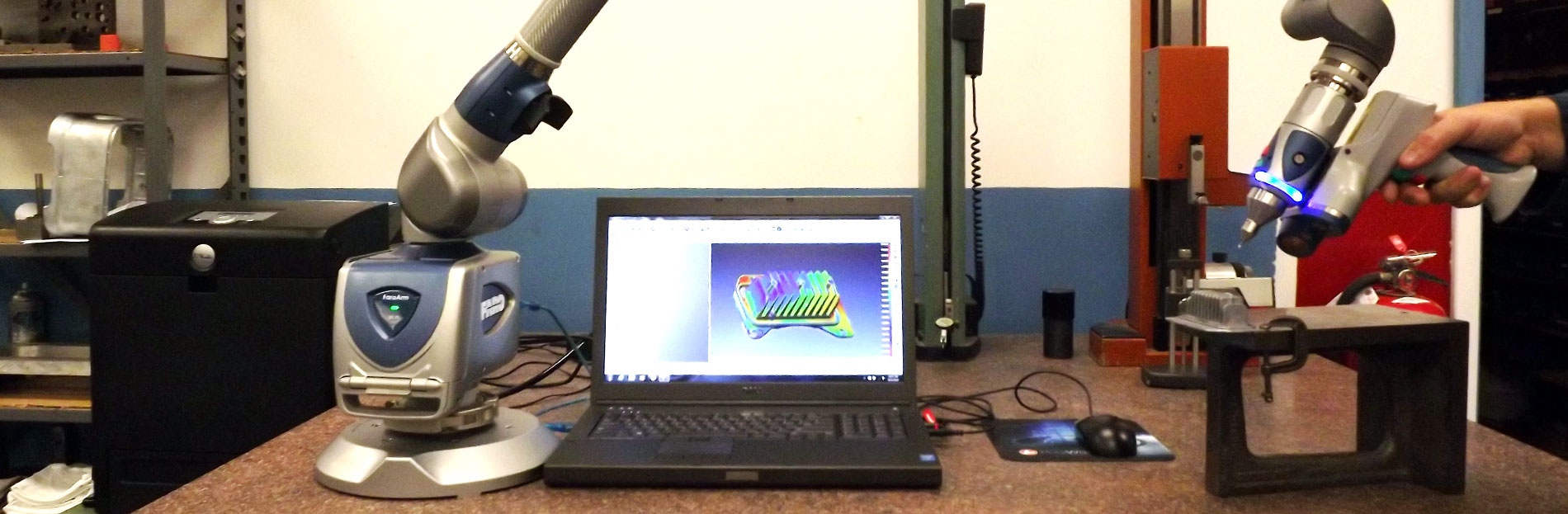
PHB reverse engineers legacy castings using advanced FARO 3D scanning systems to capture precise geometric data. Our engineers then convert this exact digital mesh into a production-ready parametric solid model.
Our Four-Step Process
- Our engineers scan the physical part using a FARO Design ScanArm to capture precise geometric data and complex surface profiles.
- We process the raw point cloud data through PolyWorks software to extract exact dimensions and generate a flawless digital mesh.
- Our team transforms this digital mesh into a fully parametric 3D solid model using Creo Parametric for seamless integration into your native CAD software.
- We utilize this optimized 3D model to engineer new tooling and cast the final parts while executing all precision CNC machining internally.
Single-Source Manufacturing Advantage
Managing every engineering phase under one roof eliminates the costly delays and severe miscommunications associated with multiple vendors. This internal workflow ensures the engineer designing your digital model collaborates instantly with the toolmaker cutting your physical die.
PHB Corp is an Expert Aluminum & Zinc Die Caster
PHB employs highly trained metallurgists and advanced technology to produce precision aluminum and zinc die castings. We manage every step from low-volume prototyping to high-volume global production runs under one roof.
Advanced Casting Capabilities and Equipment
- PHB operates 58 aluminum presses ranging from 250 to 2000 tons to handle any production volume.
- Engineers utilize internationally recognized MAGMAsoft® simulation technology to optimize tool design, mold filling, and overall casting quality before production begins.
- Highly trained in-house metallurgists perform continual chemical and physical analysis to ensure every poured alloy meets strict international specifications.
- The facility provides comprehensive surface finishing options for both metals, including powder coating, e-coating, chromate, and electroless nickel plating.
Eliminating Tooling Rework and Material Failures
Running MAGMAsoft® simulations prevents engineers from cutting expensive steel tooling that produces porous or defective parts. Having in-house metallurgists guarantees the alloy chemistry is exact, ensuring the final reverse-engineered casting survives real-world stress without failing.
How Does Reverse Engineering Apply to Aluminum and Zinc Castings?
Reverse engineering must account for each metal’s specific properties during the 3D modeling phase. Aluminum requires shrinkage compensation for high temperatures, while zinc allows for tighter tolerances and material upgrades.
Metal-Specific Model Adjustments
- Engineers adjust the 3D model for aluminum parts to compensate for the metal’s high-temperature shrinkage during cooling.
- Legacy zinc parts get optimized in CAD to achieve tighter tolerances and thinner walls than the original design allowed.
- The digital modeling phase lets manufacturers upgrade older parts to modern ZAMAK or high-strength ZA zinc alloys.
- Draft angles get calculated into both aluminum and zinc models to ensure proper ejection from the die cavity.
Better Performance Than the Original
Tailoring the 3D model to match aluminum or zinc properties produces parts that outperform the originals. The new model corrects for thermal expansion, optimizes wall thickness, and incorporates modern alloy specifications that did not exist when the original part was designed.
How Are Reverse-Engineered Castings Inspected and Finished?
First-article castings get inspected against the original laser scan data to verify dimensional accuracy. PHB handles both quality inspection and final CNC machining in the same facility.
Inspection and Precision Finishing
- First-article aluminum or zinc castings from the new tooling get inspected against the original laser scan data for dimensional accuracy.
- Quality assurance processes verify that newly cast parts meet all required dimensional tolerances and structural integrity standards.
- PHB uses in-house CNC machining to apply final precision finishes to the reverse-engineered parts.
- Keeping reverse engineering and CNC machining under one roof means single-source accountability for the entire production run.
Models Need Verification in Metal
A reverse-engineered 3D model means nothing without quality control to prove the physical part matches the digital data. Strict inspection catches tooling errors before production runs, and precision machining brings the cast part to final specifications that CAD alone cannot guarantee.
Reversed Engineered Castings FAQs
Q: What types of aluminum and zinc alloys does PHB cast?
A: PHB casts a wide variety of standard and specialty metals, including Aluminum 360, 380, 383, 413, and A304 K-Alloy, as well as Zinc Zamak 3, 5, 7, and high-strength ZA alloys.
Q: Can PHB provide prototypes before committing to high-volume die casting?
A: Yes, we offer low-volume prototyping using methods like plaster injection mold castings, direct metal laser sintering (DMLS), and CNC hog-outs.
Q: What surface finishes are available for reverse-engineered cast parts?
A: We manage comprehensive finishing requirements to meet customer specifications, offering powder coating, wet paint, e-coat, chromate, and electroless nickel plating.
Q: How does MAGMAsoft® simulation improve the die casting process?
A: MAGMAsoft® simulation allows engineers to analyze mold filling, thermal stresses, and solidification before cutting the steel die, which optimizes tool design and reduces defects.
Q: What industries rely on PHB for die casting and reverse engineering?
A: PHB serves a diverse global client base by providing precision cast components for highly regulated sectors like automotive manufacturing, large appliances, and the U.S. military.
Partner With PHB For Expert Reverse Engineering Casting Services
Legacy die cast tooling eventually wears out and forces manufacturers to shut down active production lines. The reverse engineering of castings provides a reliable path forward by transforming physical parts into accurate 3D models for new mold fabrication.
PHB Corp provides a complete turnkey solution for precision aluminum and zinc die casting under one roof. Our internal team of engineers and toolmakers works together to transition your scanned data into high-quality physical components.
Click below for a quote and to learn more about our reverse engineering and die casting capabilities.
Get a Quote for Reverse Engineering Casting
[/wpv-noautop]